
Theme of CAP2026
Democratising Astronomy Communication in the era of accessible Artificial Intelligence
This theme refers to making astronomical knowledge, tools, and dialogue available to everyone, regardless of geography, language, education level, or socio-economic status. Accessible AI tools offer powerful opportunities to break several traditional barriers. The true potential of AI lies not just in enhancing astronomy communication, but in redistributing the power to communicate — moving it from institutions to individuals and communities. The conference would explore how we can ensure that AI becomes a tool for empowerment for global astronomy outreach by focusing on equity, local relevance, and accessibility while allowing creative endeavors to become easier to undertake.
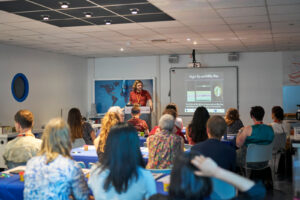
Conference
Sub topics
In this context, we particularly welcome contributions related to a number of topics. Please go through the descriptions to ensure that your submission is relevant and effective for the conference.
As artificial intelligence (AI) becomes increasingly integrated into digital platforms, its influence on astronomy communication needs investigation. AI-driven tools offer powerful capabilities for content generation, personalization, translation, and audience engagement. However, these same tools raise critical challenges around misinformation, algorithmic bias, loss of human context, environmental impact, and the amplification of dominant narratives. Presentations under this topic will examine how AI is reshaping the digital landscape for astronomy communication, and explore strategies to harness its benefits while addressing its limitations.
Astronomy communication requires a deep understanding of a project’s goals, objectives, audience, and strategy. With this topic, we hope to see research conducted in astronomy communication, including evaluated attempts at using evidence-based approaches to communicate astronomy. This may include evidence-based approaches to performing outreach events of a particular type or for a particular audience, attempting to understand behavioural changes (e.g., reducing the amount of outdoor lights used at home), changes in understanding (e.g., shifting people’s understanding of how the phases of the Moon are formed), or motivations (e.g., why people engage with astronomy).
Astronomy communication increasingly intersects with other fields from art to computer science, from music to cultural studies and philosophy, and much more. Such interdisciplinary and multidisciplinary approaches can help enrich the ways we interpret, present, and share the universe. This topic could explore how collaborations across various disciplines can spark new methods of engagement, deepen understanding, and broaden the relevance of astronomy to our audiences. Case studies, partnerships, and creative practices that blend multiple perspectives are encouraged.
Tactile, interactive, and immersive experiences can help spark curiosity and move audiences towards a deeper understanding in ways that static content sometimes cannot. This topic focuses on the design, development, and evaluation of hands-on activities and exhibits that communicate astronomical data and concepts in engaging and memorable ways. From traveling kits and museum installations to pop-up displays and maker spaces activities, contributors will explore how physical and interactive formats enhance learning, accessibility, and emotional connection with our Universe. The topic will also consider the role of facilitators in guiding experiences, fostering dialogue, and adapting content for multiple audiences.
Note: We also encourage 20-minute demonstrations that share examples of successful hands-on activities, performances etc. Presentations should be focused on the design and implementation of the process and not just on the content itself.
A collective understanding of astronomical facts and theories including its public perception bases heavily on astronomical writings. These writings may come through books – hard science, soft science, semi-popular books, etc – written by experts and amateurs alike. Also science journalism had helped flourish interests in astronomy for the public for a long time. Journalists have also contributed in writing books on astronomy which have been well received. Writing also comes through blogs, which have seen huge success. Under this topic, the useful means and effects of writing and journalism toward astronomy awareness will be examined.
Partnering and collaborating with communities that are underserved and/or underrepresented is essential for fostering inclusivity and broadening participation in astronomy, and in science. This session will explore strategies, programs, and partnerships that can effectively engage diverse constituents, including those communities facing socioeconomic, geographic, linguistic, or cultural barriers. Emphasis will be placed on community-driven approaches, culturally relevant content, and sustainable participatory models that help empower and inspire connections to our shared universe.
Astronomy belongs to everyone, yet some traditional tools and practices can unintentionally exclude people with disabilities and those who are neurodiverse. This topic welcomes the exploration of innovations that promote equitable access to astronomical content and experiences. From sonification of data and tactile graphics to multisensory exhibits, immersive technologies, and cognitive-friendly learning environments, inclusive tools can unlock the universe for a wider range of learners and explorers. Projects, research, and practices that center people with disabilities and the neurodiverse – not as an add-on, but as a core design principle—are welcome. We will discuss how astronomy communication can become more inclusive, participatory, and perceptually diverse.
Astronomy in Central Asia and the Middle East has a rich legacy that bridges ancient traditions with modern science. The region was once home to great observatories and great scholars who advanced celestial measurements and star catalogues that influenced both Islamic and European astronomy. Ancient and medieval structures still exist, reflecting the deep cultural ties to the cosmos. Today, countries across Central Asia and the Middle East are revitalizing their astronomical heritage through modern observatories and regional collaborations, while also embracing space science initiatives. This topic can highlight how public outreach can play an important role in this rejuvenation of interest in connecting the historical legacy of sky-watching with contemporary global astronomy.
With increasing attention on accountability and effective use of resources, understanding the impact of astronomy communication, outreach, and engagement is more important than ever. Measuring success goes beyond attendance numbers or social media metrics. This topic will explore qualitative and quantitative methods for assessing outcomes such as understanding, engagement, and inclusion. How can thoughtful evaluation inform design, support funding, and strengthen astronomy outreach across diverse contexts?
Don't Miss Out!
Join us at CAP Conference 2026 for an enriching experience that seeks to transform astronomy communication across the globe.